Wrapping a Parcel with a Reusable Ribbon Tie
Wrapping a parcel with a reusable ribbon tie keeps paper easy to remove and ribbon ready for another use, with proportion and placement doing the work.

Wrapping a parcel with a reusable ribbon tie means the paper can open without being cut, and the ribbon can return to the drawer intact. The useful decisions are modest: choose a ribbon that suits the parcel, place the knot where it is easy to reach, and avoid securing the wrap with adhesive beneath the tie.
This is a method for a box or similarly firm parcel wrapped in paper. It does not require a permanent bow, a special knot, or an elaborate arrangement of tails. Think of the ribbon as a belt around a parcel: it holds the paper in place, but it should not have to wrestle the contents.
What makes a ribbon tie reusable?
A reusable tie comes off by hand, without scissors or peeling tape from the ribbon. The paper still needs to stay closed during handling, so the ribbon must provide enough tension to hold the folds in place. The aim is a secure wrap that releases when the recipient loosens the knot.
That changes how the paper is closed. Fold the ends neatly and tuck the final edges under one another where possible. If the paper needs a small piece of removable tape to stay put before tying, use it on the paper alone, away from the ribbon and the parcel’s opening edge. The ribbon should not be glued, stapled, or taped to the wrapping.
For a firm box, one ribbon loop around its length or width may be enough. A cross-wrap, with one loop in each direction, can hold larger or more slippery paper in place. More ribbon is not automatically more secure; extra crossings can make the parcel harder to open and the tie harder to remove cleanly.
How should ribbon width and length match the parcel?
Start with the parcel, not with a favorite ribbon. A narrow tie can look slight on a broad, flat box, while a very wide ribbon may cover much of a small package and make the knot bulky. The proportion should let the paper remain visible and leave enough ribbon to tie comfortably.
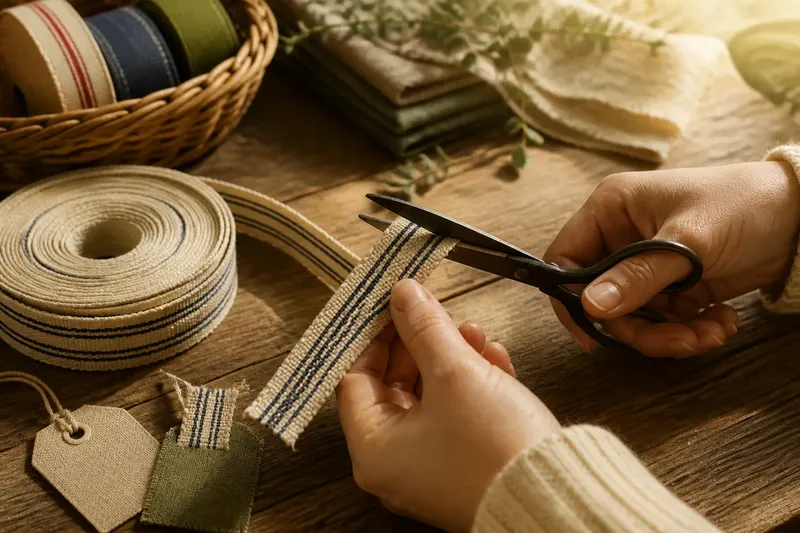
Lay a candidate ribbon across the parcel before cutting it. For a single wrap, guide it around the box and bring both ends to the intended knot position. Leave extra length for the knot and tails, then make a trial tie. If the ends barely meet, choose a longer piece rather than pulling the ribbon so tight that the paper buckles.
Ribbon construction also affects the feel of the tie. A supple ribbon bends easily around corners, while a stiffer one can hold a more defined shape but may resist a small knot. Smooth surfaces can slide against one another; textured surfaces may grip more firmly. These are handling differences, not a ranking. A short trial around the parcel shows whether the selected ribbon stays put without needing a hard tug.
Consider the recipient’s likely reuse, too. A length that leaves small, manageable tails after tying is easier to store than a long cascade that drags across the package. If you want a bow, keep its loops compact enough that the parcel can sit flat. If the ribbon itself is meant to be saved, avoid trimming it to fit a single presentation.
Where should the tie sit?
Placement affects both appearance and opening. A tie centered across the top gives a familiar, balanced finish and makes the knot easy to find. A tie closer to one edge leaves more clear space on the top, which may suit a label or a broad design on the paper. Either can work if the ribbon lies flat and does not cover a closure the recipient needs to reach.
For a one-direction wrap, position the knot on the top face rather than underneath the box. The recipient can lift it without turning the parcel over, and the knot is less likely to be crushed when the package rests on a surface. A side-positioned knot can be useful for a shallow box, but avoid placing it on a corner where pressure may distort the paper.
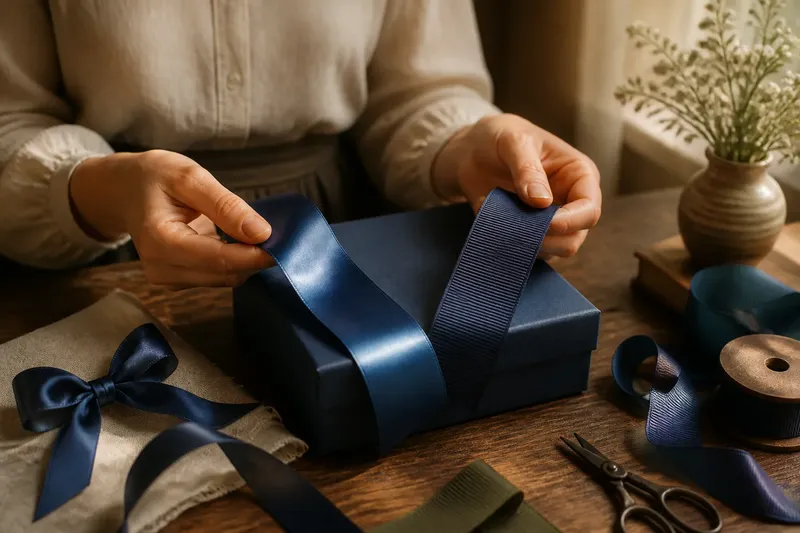
On a cross-wrap, decide which loop should appear most prominent. The first ribbon goes around the parcel and is brought to the top; the second crosses it at the chosen point. Keep the intersection centered if you want a conventional look, or move it slightly toward one end if the parcel has an off-center label or decoration. The knot should still be accessible without pulling the two loops out of alignment.
What should happen before tying?
Take a moment to settle the paper before adding ribbon. Smooth the broad faces with your hand, sharpen the folds along the box edges, and tuck loose corners beneath the final flap. If the parcel has a label, leave it visible and clear of the knot. A tidy base means the ribbon can remain lightly tensioned instead of being used to hide loose wrapping.
Then set the parcel on a stable surface and arrange the ribbon around it. Keep the ribbon’s face consistent as it travels around the box if that matters to its appearance. At the top, cross the ends once and bring them into a simple knot. Pull each end in turn, gradually, until the paper is held without dents.
For an optional bow, form two loops and tie them as you would a simple bow on a shoe. Adjust the loops by pulling gently at their bases, then even the tails. A flat knot with two loose ends is just as reusable and often easier to undo. Avoid a knot so tight that the recipient must pick at it; “secure” and “difficult to open” are not synonyms, though gift wrapping sometimes behaves as if they are.
How can the wrap suit different parcels?
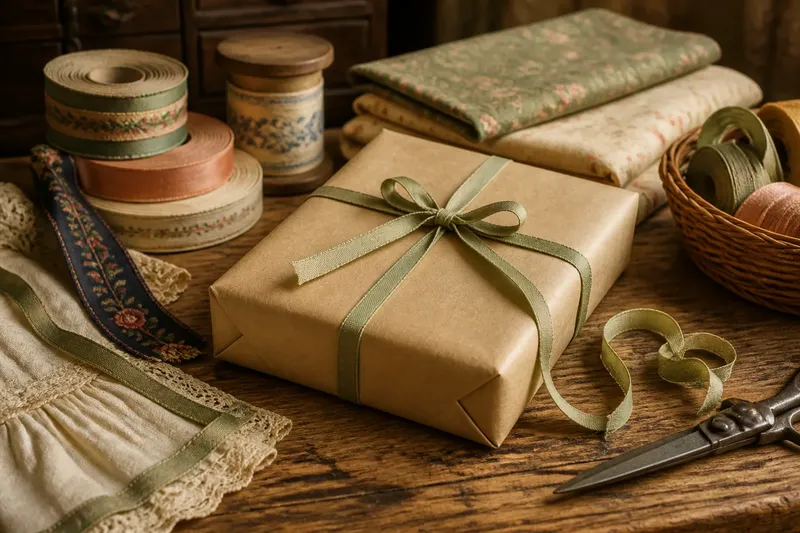
Say you have a shallow book-sized box, plain paper, and a ribbon that reaches around the parcel with room for a small knot. You place the ribbon lengthwise, move the knot to the top near one short end, and tie it without a bow. The paper stays held under the loop, the label remains unobstructed, and the recipient can loosen the knot from the top rather than turn the box over.
For a deeper box, a cross-wrap can prevent the paper ends from lifting at both ends. For a soft parcel, the ribbon may compress the contents or slide off; use a firm outer box if the item needs support, or choose another closure if the parcel cannot hold its shape. On an unusually wide parcel, a single central tie may let the paper shift at the edges, so a second loop can distribute the hold more evenly.
Fragile or valuable contents call for suitable inner packaging and careful handling; decorative ribbon is not protective packing. Keep the tie clear of any opening mechanism, fragile label, or address information. The ribbon’s job is to hold the wrapping, not to make a parcel safe for rough treatment.
What should you do after the parcel is opened?
Invite the recipient to loosen the knot rather than cut the ribbon. Once it is off, lay it flat and check for creases, fraying, stains, or a knot that has left a strong bend. A gentle hand-smoothing is usually enough for ordinary storage. Do not pull hard at a tight knot, since that can distort the weave or stretch a delicate ribbon.
Store clean ribbon loosely coiled or laid flat, away from damp and sharp edges. If the ribbon has been tied around food, a scented item, or something that could transfer residue, set it aside for an appropriate use rather than putting it straight back into a gift drawer. Keep a few reusable lengths together so the next parcel does not prompt a search through every box of supplies.
Which details do readers often ask about?
Can I use ribbon without wrapping paper?
Yes, if the parcel already has a suitable surface, such as a box with a lid that stays closed on its own. The ribbon can add a removable finish, but it should not be the only closure for contents that might spill or shift.
Is a bow necessary for a reusable tie?
No. A simple knot with two tails is easy to loosen and uses less length than a large bow. Choose a bow when its shape suits the parcel, not because a ribbon appears incomplete without one.
How do I stop the ribbon from slipping?
Place the tie on a flat face and use moderate tension, then check whether the ribbon stays in position when the parcel is gently lifted. If it slides, try a cross-wrap or a ribbon with a less slippery surface rather than cinching it until the paper creases.
Can the same ribbon be used on another parcel?
Usually, if it comes away cleanly and remains in good condition. Let its length and flexibility guide the next use; a short piece may suit a small box, while a ribbon with a persistent crease may work better as a loose decorative tie than as a tight wrap.
How do you make the next use easier?
When choosing a ribbon for wrapping a parcel with a reusable ribbon tie, leave room for the next parcel to be different. A versatile length, a knot that releases by hand, and placement that avoids labels or closures make the tie useful beyond one occasion. Keep the ribbon out of adhesive, store it without a hard knot, and it will be ready for the next box that needs holding together without turning its wrapping into a permanent fixture.