The Bow Does Not Have One Universal Meaning
A bow’s meaning depends on placement, setting, and use. Learn how to read its context before choosing one for clothing, gifts, or decoration.
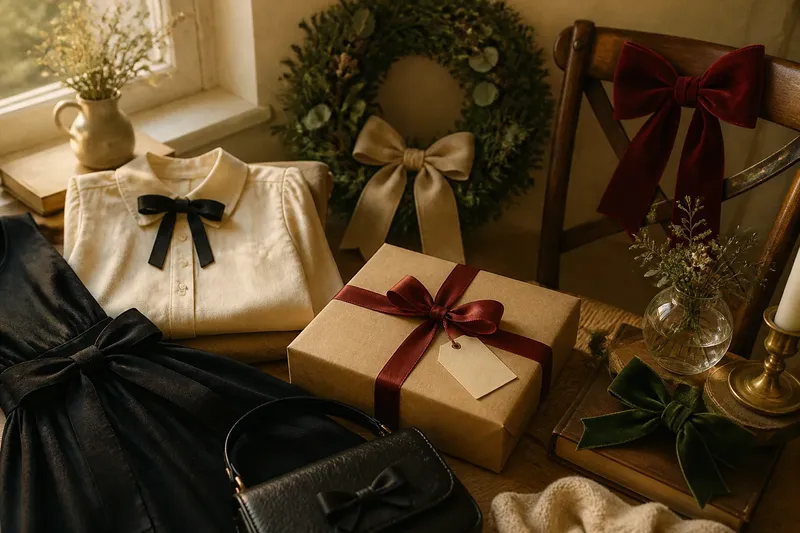
A bow on a collar can read as formal; the same bow on a parcel can signal a gift, and on a door it may mark a season or occasion. The meaning of a bow depends less on its loops than on where it sits, what surrounds it, and what people expect there.
That distinction matters when choosing a bow for clothing, gifts, or decoration. Instead of asking what bows mean in general, ask what this bow is likely to mean in this particular setting. Placement offers a useful starting point, but it does not settle the question on its own.
What does placement tell you?
On clothing, a bow is part of how a garment presents the person wearing it. At the neckline, it can suggest polish, ceremony, or a deliberately soft accent. At the waist, it may define the garment’s shape or draw attention to that point. A bow attached to a shoe or bag is more likely to function as an ornamental detail than as a statement about the wearer.
Position also changes how conspicuous a bow feels. A small bow tucked under a jacket collar makes a quieter impression than a large one centered at the throat. Neither placement has a fixed meaning, but each creates a different visual emphasis. The bow behaves a little like punctuation: the same mark can alter a sentence depending on where it appears.
On a gift, a bow usually belongs to the act of presenting and opening. It can make the parcel feel considered, but it does not tell the recipient exactly how to respond. On a wreath, chair, or mantel, the bow joins a larger arrangement; its significance is usually shaped by the room and occasion rather than by the ribbon alone.
How do clothing, gifts, and decoration differ?
Each setting comes with its own expectations. Clothing is read in relation to the wearer, the garment, and the formality of the occasion. A bow may be playful in one outfit and ceremonial in another. For everyday wear, a restrained placement can make the detail feel integrated; for a festive or formal setting, a more prominent bow may suit the clothes around it.
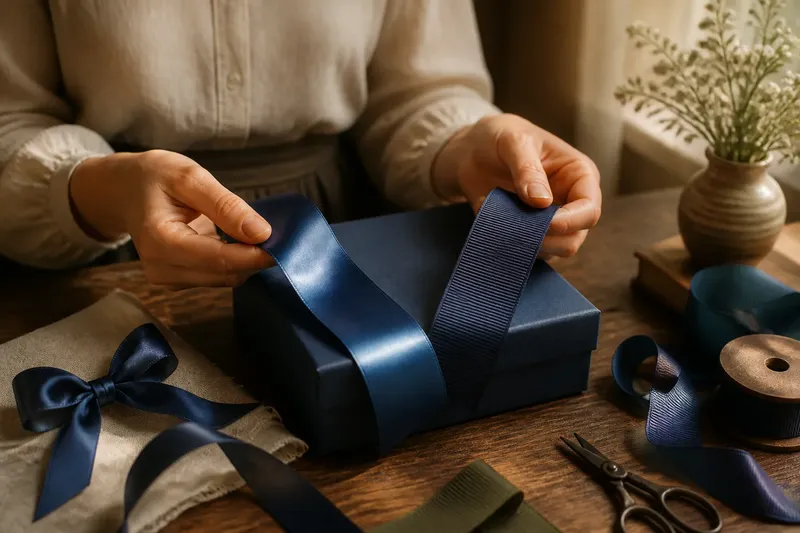
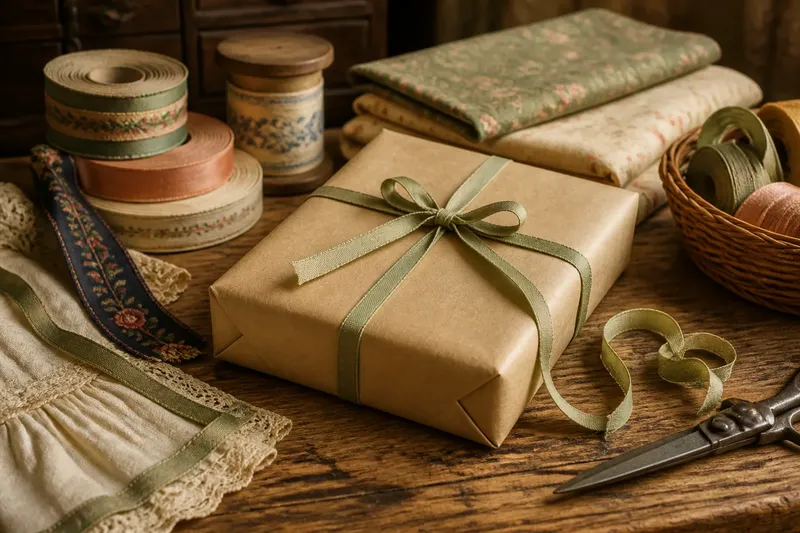
A gift bow is more directly tied to exchange. Its position on the package can make it part of the presentation, while the wrapping, tag, and occasion supply the rest of the message. A simple bow on a plain paper parcel may feel thoughtful. The same bow on a brightly decorated package may become one detail among many.
Decorative bows are read through their surroundings. A bow on a wreath might suggest a seasonal display, while one on a chair at a gathering may help mark an event. A bow on a household object can simply be a visual accent. If the setting is unfamiliar, viewers may not share the same interpretation, which is not a failure of the ribbon. It is a reminder that context does some of the communicating.
Which bow suits the intention?
Choose based on the impression you want the bow to contribute, not on a universal code that may not exist. A few practical distinctions help:
- For a quiet clothing detail: Place a modest bow where it relates to a seam, collar, or fastening. This suits someone who wants ornament without making it the main feature.
- For a noticeable clothing accent: Use a more prominent position, such as the neckline or waist, if the garment and occasion can carry that emphasis.
- For a gift: Place the bow where it is visible but does not obscure the tag or make the parcel awkward to handle. This suits a presentation meant to feel deliberate without competing with the gift itself.
- For room decoration: Let the bow support an existing arrangement, such as a wreath or table setting. This suits someone who wants the display to feel connected rather than isolated.
- For an object with a specific audience: Consider how that person or group may read the placement. When the meaning could be sensitive or unclear, a less prominent bow is a reasonable choice.
Say you are choosing a bow for a plain gift box for a colleague. You want it to look thoughtful but not intimate. You tie a small bow near the center, leave the recipient’s name visible, and keep the surrounding decoration restrained. The expected result is a clear presentation of a gift, with less emphasis on a personal or ceremonial message. The choice does not control every interpretation; it simply makes the intended one easier to read.
Why can the same bow be read differently?
Viewers bring their own experiences, habits, and expectations to what they see. A bow may call to mind celebration, childhood clothing, formal dress, or a particular custom for one person and mean little more than decoration to another. The setting narrows the possibilities, but it rarely erases individual differences.
Scale and material add further cues. A crisp bow on a tailored garment can feel more formal than a soft, loose one on a casual bag. A brightly colored bow may stand out against a plain background, while a matching bow can blend into the object. These are visual effects, not a code with one agreed translation.
Local customs, dress codes, and the expectations of a particular event can matter, too. Where those expectations are specific, follow the relevant guidance rather than guessing from the bow alone. Otherwise, look at the whole setting: who will see it, what the object is for, and how prominent you want the detail to be.
What should you ask before choosing a bow?
Does a bow always mean a gift?
No. On a parcel, it often supports the presentation of a gift, but on clothing or furniture it can be purely decorative. The surrounding object and occasion provide the stronger clues.
Does a bow on clothing change what an outfit communicates?
It can change the emphasis by drawing the eye to a particular part of the garment. Whether that feels formal, playful, or understated depends on the bow’s scale, placement, and the rest of the outfit.
Is a large bow more meaningful than a small one?
A large bow is usually more noticeable, not automatically more meaningful. A small bow in a prominent or unexpected position can attract attention just as effectively.
How do you choose a bow when the audience may read it differently?
Choose a placement that fits the object and occasion, then keep the bow’s prominence in proportion to the message you intend. If the interpretation has practical or personal consequences, asking the recipient or host is clearer than relying on a general assumption.
What is the simplest way to make the choice?
Begin with the object: clothing, a package, or a decorative piece. Then identify the setting and audience, and decide whether the bow should lead the eye or remain a supporting detail. The same ribbon can serve those different purposes without carrying the same meaning each time.
For a bow’s meaning, placement is a useful clue, not a verdict. Read it alongside the object, occasion, and people who will see it. That small pause before tying the loops is often enough to choose a detail that feels intentional rather than accidental.